
SuperAgentDroy
A local-first personal SuperAgent orchestration plugin for DeepSeek Harness. Validated single-window quasi-full-duplex chat, deterministic single-engine transactions, Core4 identity files, and dual-bank memory isolation.
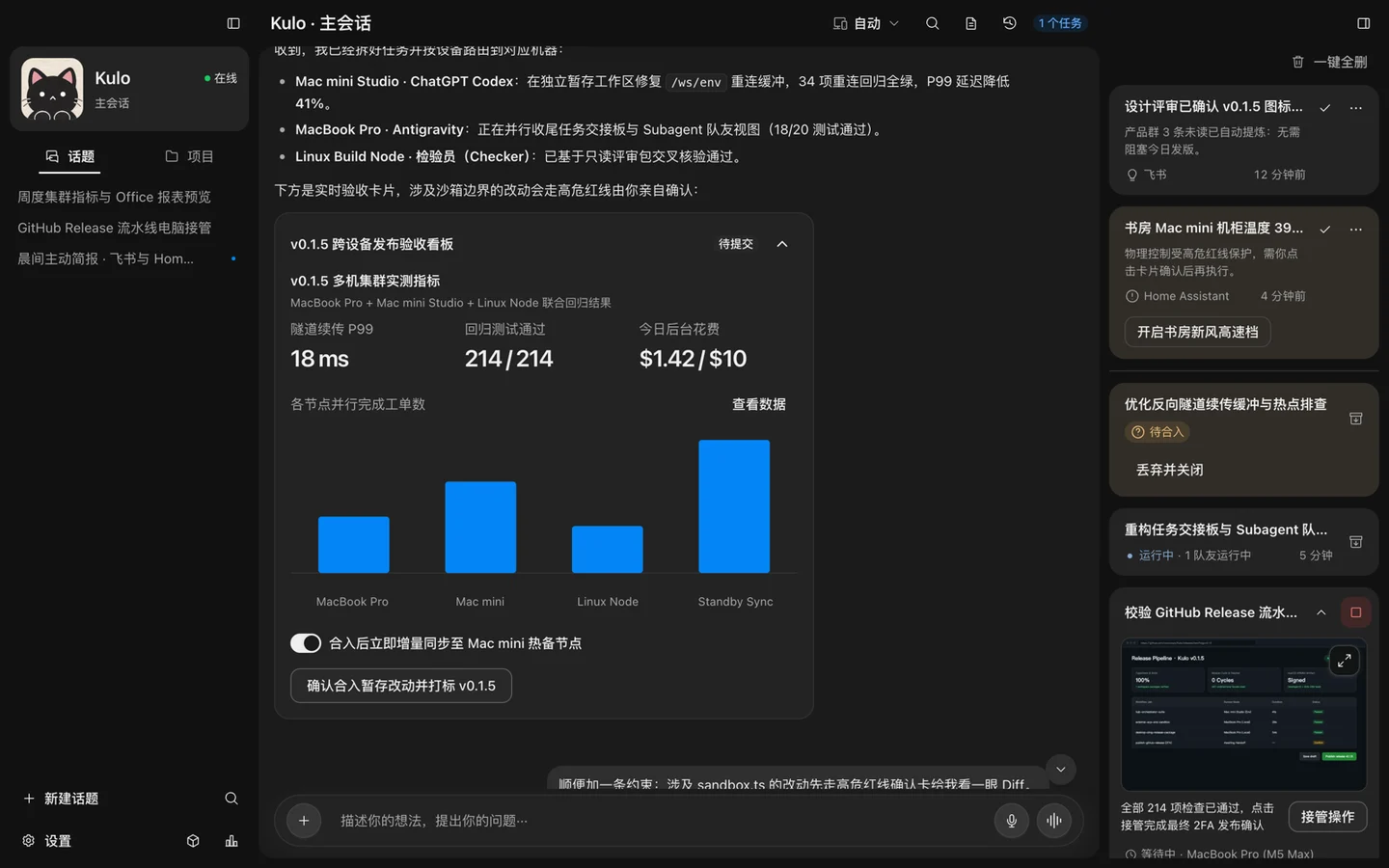
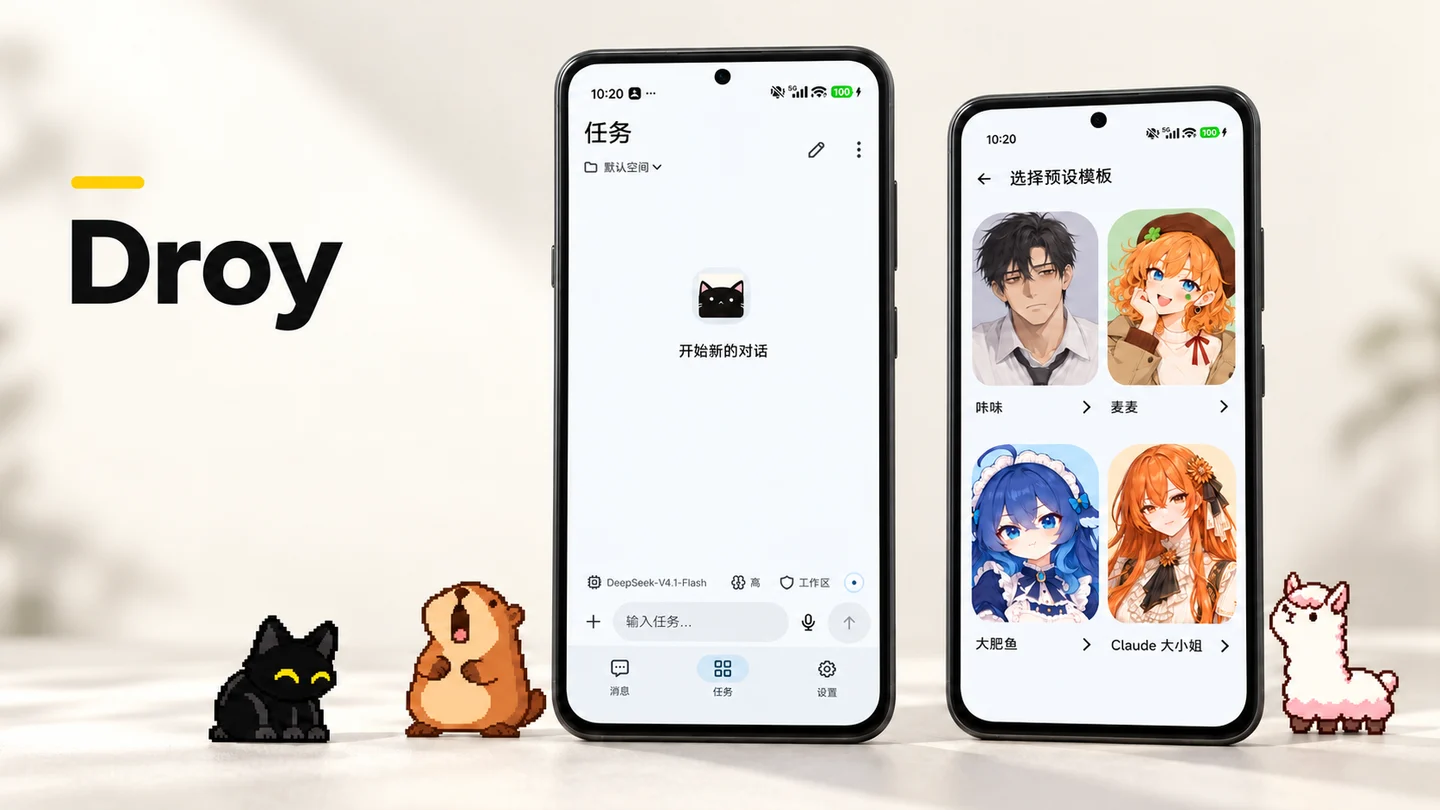
Screenshots
Overview
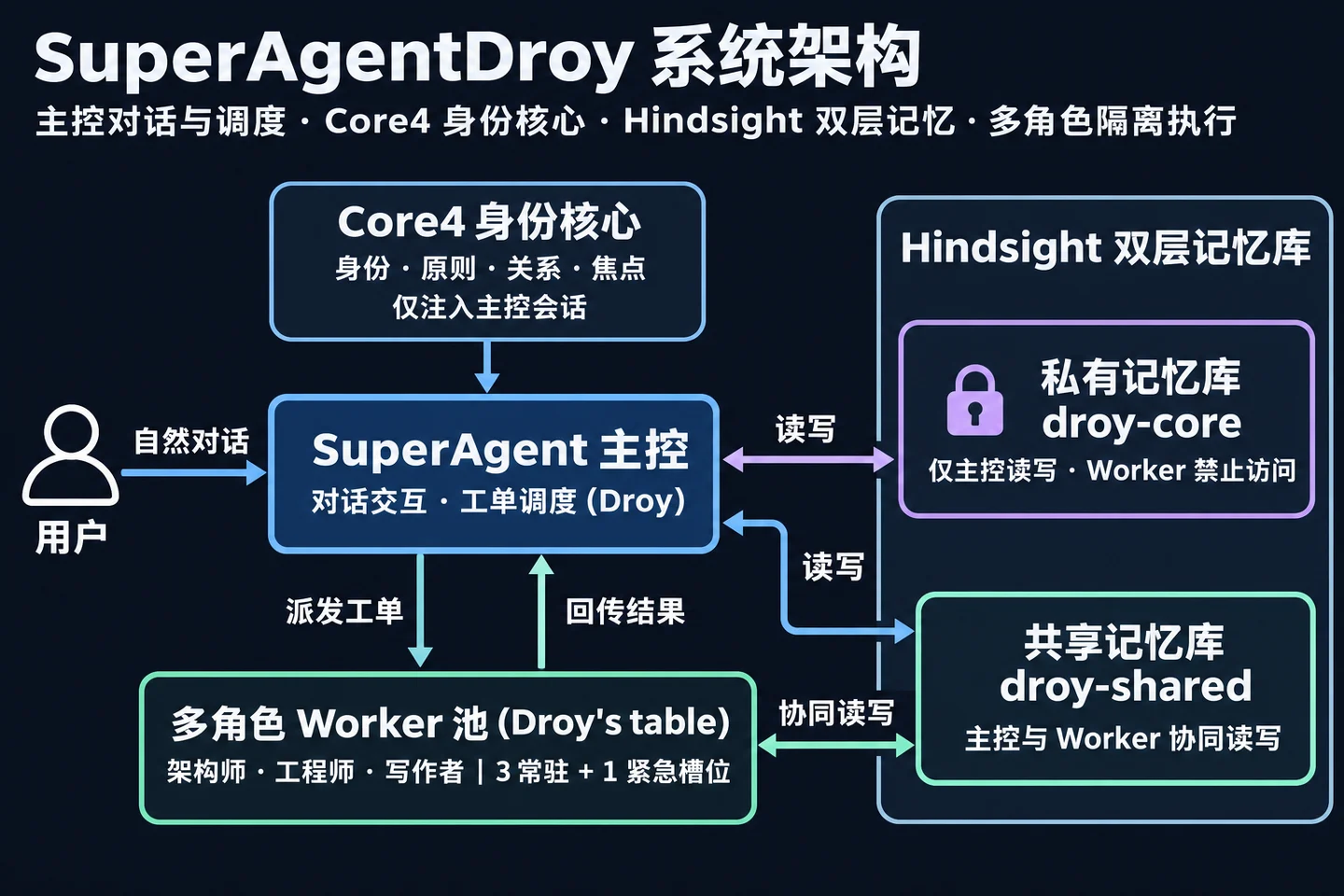
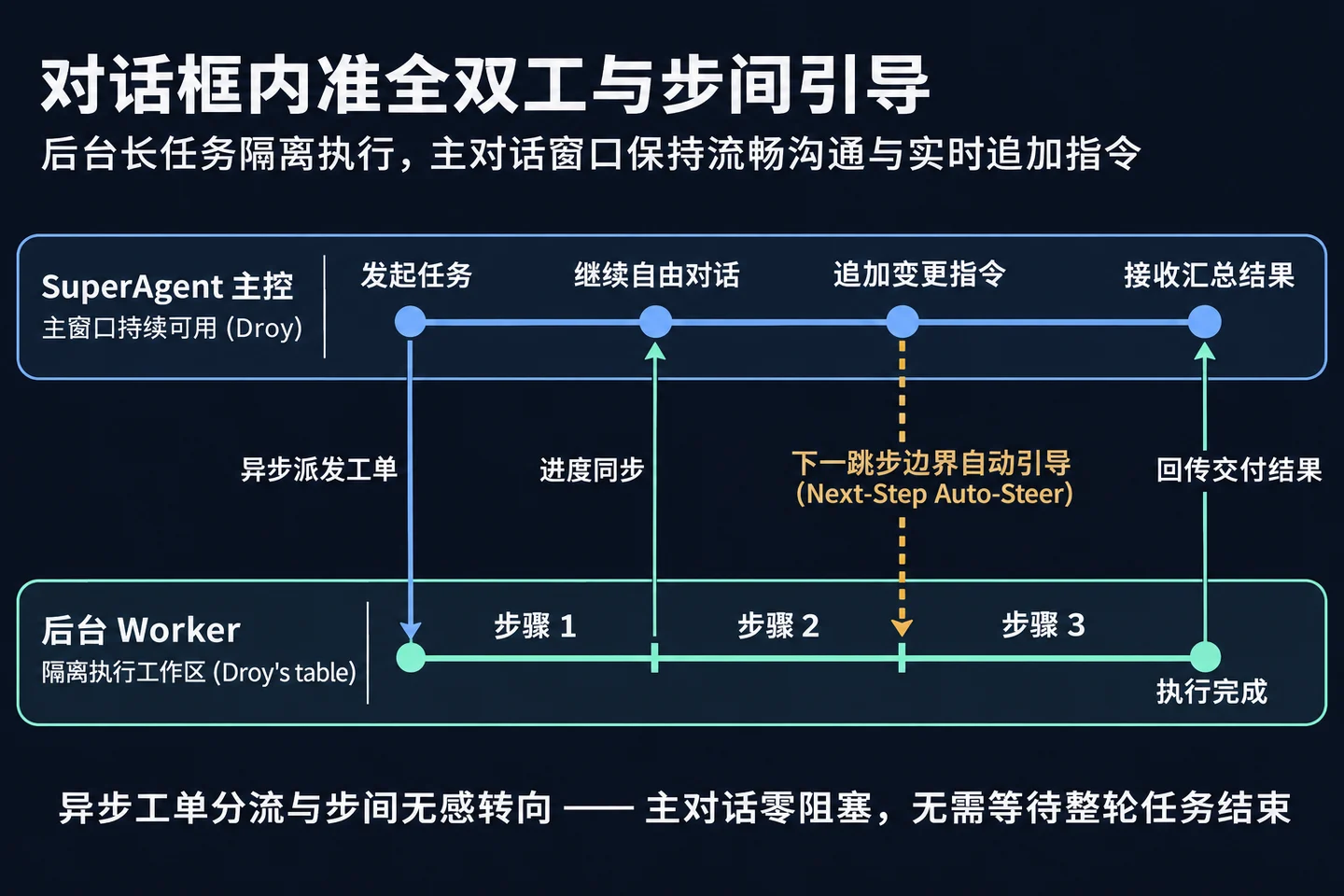
SuperAgentDroy is a local-first personal SuperAgent plugin for DeepSeek Harness. It reimagines a single chat window as a non-blocking primary controller backed by an isolated pool of multi-role workers — serving as the architectural proving ground that directly shaped Kulo.
Architecture Highlights
Single Chat Window ──► Primary Controller (Droy)
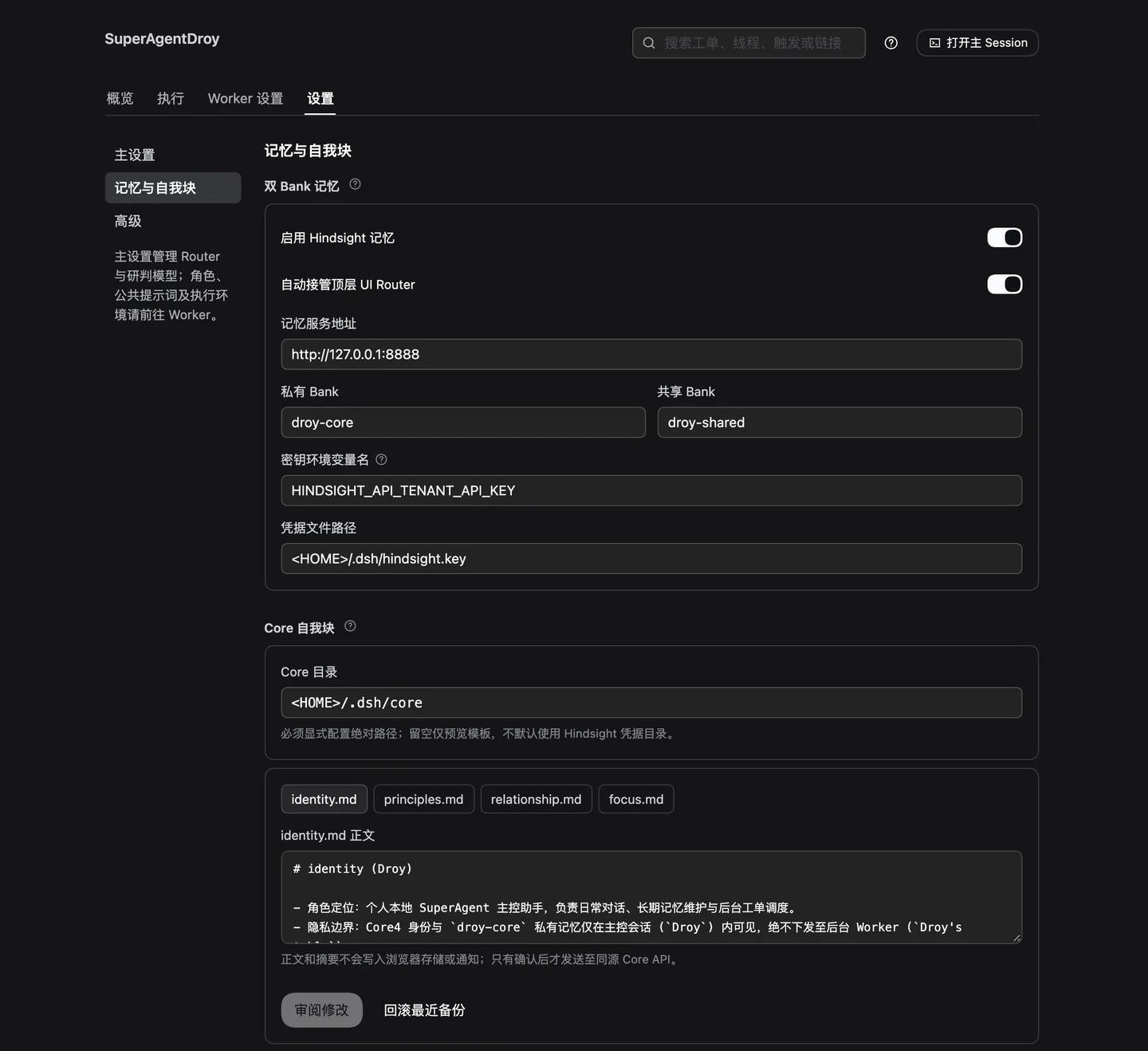
                         ├─ Exclusive access: Core4 identity + private droy-core bank
                         ├─ Deterministic Engine (Intake / Evals / Tickets / Outbox)
                         └─ orchestrator_dispatch & Next-Step Auto-Steer
                                            │  Aggregated Inbox
                                            ▼
                         Isolated Worker Pool (Droy's table/<ticket>)
                         ├─ Configurable roles (architect / engineer / writer)
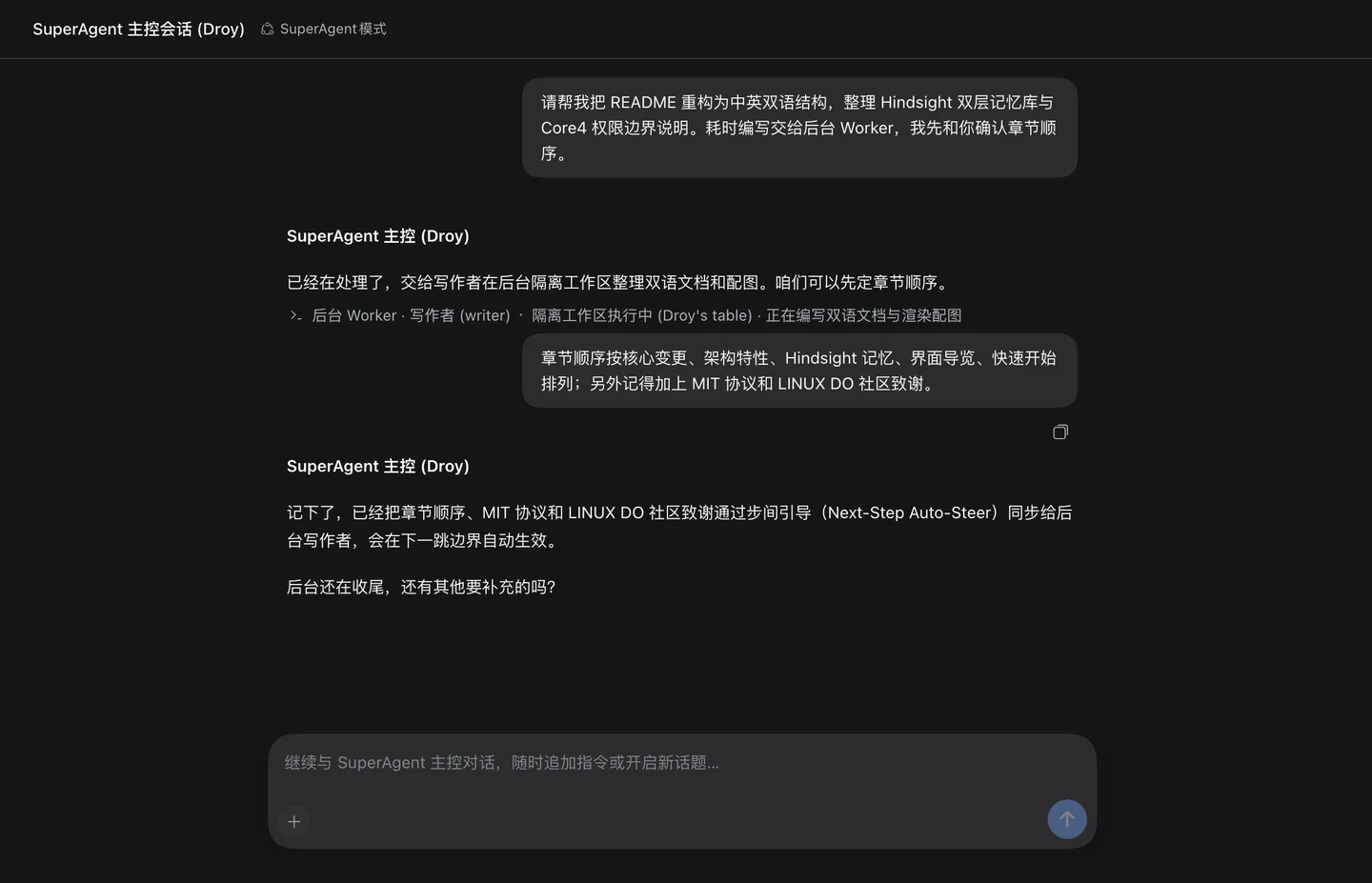
└─ Shared engineering bank droy-shared (worker R/W · main R/O)- Quasi-Full-Duplex + Next-Step Auto-Steer: Dispatching a long task returns control to the main chat immediately. Follow-up clarifications aggregate in the worker inbox and inject cleanly at the next step boundary instead of aborting work in progress.
- Single Deterministic Transaction Engine: All core state transitions commit synchronously through one
Engine(Ports & Adapters), eliminating concurrent state races across parallel workers. - Physical Privacy Isolation (
Core4+ Dual-Bank Memory): Personal identity files require diff review with SHA-256 snapshots and are physically inaccessible to worker tools; private preferences (droy-core) stay strictly separate from reusable engineering notes (droy-shared).
Key Trade-offs
- Personal local loop over team webhook gateways: Dropping multi-tenant webhooks and quota layers enabled zero-infrastructure local startup and clean workspace isolation.
- Tool-level boundaries over prompt instructions: Instead of hoping a worker obeys “do not leak personal notes,” private banks are simply omitted from worker toolsets.
- Role-based model routing: Splitting architecture, coding, and writing across distinct worker profiles balances reasoning quality against cost and latency.